
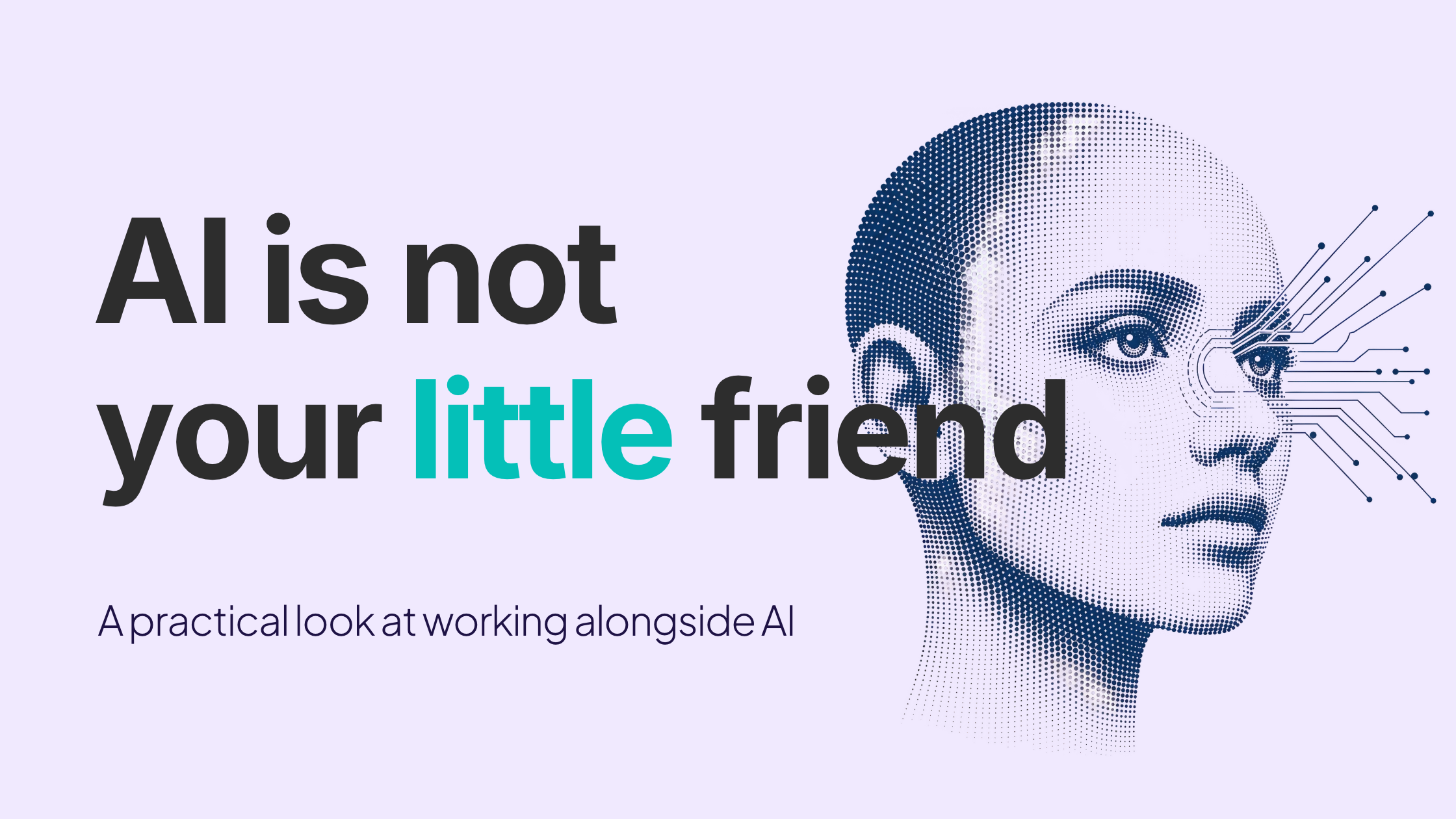
Unpack three essential leadership mindset shifts to combat AI change fatigue and effectively lead technological transformation: treat AI as a free headcount addition, manage it as a direct report rather than a peer, and apply firm boundaries to navigate its adolescent development phase.
Three leadership mindset shifts for managing through the AI transformation
A client recently said to me: “I’ve been told I need to integrate AI into my work, but they haven’t given me any guidance as to how. Do you have any advice?”
As someone who has previously led change and transformation efforts and still work with many client in the tech industry, I regard current discourse around AI to be a familiar challenge. A different degree of complexity, but familiar.
And as with any change effort where insufficient time has been spent on (1) articulating the need for urgency, (2) bringing impacted stakeholders along on the journey, (3) communicating transparently and relatably, and (4) providing people sufficient resources and guidance to see the change through and sustain it, the change fatigue and resistance can kick in quickly. Thats what I see playing out with AI.
The AI fatigue is real. The pressure on our leaders to follow these directives, and make sense of it for themselves and their team, is immense. And many feel like they’re being sent down a river without a paddle or a map.
The key to navigating these murky waters starts with evolving how we think about the challenge. Leadership mindset matters.
Your human wisdom and experience will be your greatest advantage in this technological era.
Here are three recommendations for how leaders can think about AI in preparation for figuring out how to integrate it into their teams’ workflows:
1. Think about AI like you were gifted a free headcount for your team.
“Use AI more” or “Integrate AI into your workflow” are quite nebulous. If you treat AI like a new box on your org chart, it then becomes an intentional resource that will augment your team and enhance your ability to achieve your performance goals in some way. You get to decide how that happens.
Start by asking yourself these questions:
What title would this resource have?
What roles and responsibilities would you delegate to this resource?
What onboarding information do you need to share with this resource?
How will you measure this resource’s performance against the role expectations?
How will you handle underperformance?
How does this resource affect how your performance is measured? In other words, if this resource is taking any work off your plate, what then becomes a more critical measure of your performance?
How well do I understand how work already flows in this org today? How can I gather insights to better understand where things could be flowing better with the help of AI and where that flow will still be inhibited?
Approaching AI integration with the rigor of job design and process redesign exercises would be a game changer.
2. Think about AI like it’s your direct report--not you seasoned peer, and certainly not a guru.
I’ve had clients express their frustrations to me about team member who is overleveraging AI.
If you treat it like a seasoned peer, you will be less likely to ask challenging questions because you assume it is as educated as you on a subject.
If you see if as a guru, all knowing and all seeing, you will definitely be less likely to question it or challenge it.
But if you treat it like a direct report in the truest sense, here’s what would change:
You’d take the time to set clear expectations of how you need it to perform;
You would challenge its logic, ask clarifying questions, and coach it to perform at its best;
You would give specific, constructive feedback so that it can produce better results; and
If you discover that it isn’t able to perform the necessary duties, you figure out a plan B and lean in more to see if you can help turn things around.
Your critical thinking and discernment will ensure that AI is learning what it needs to meet you and your team’s needs.
3. Think about AI like it’s in the throes of adolescence.
There’s a lot of discussion about what AI could be to our work and society when it “grows up”. But let’s not conflate aspirational descriptions with where it actually is today. AI is adolescent; it wants to be independent, yet it’s still quite dependent on others. It is still defining its consciousness, and is deeply exploring its sense of identity. It’s brain is still developing.
And today, AI makes errors. It misquotes. It misinterprets. It hallucinates. It tells you what you want to hear. And in the end, you will be the one accountable for the consequences of any errors in it’s judgment. We are already seeing the effects of people using AI as it’s lawyer, doctor, therapist, love interest, friend, etc.; boundaries are getting blurred and a whole round of regulatory red flags have been introduced.
So more than anything, adolescent AI needs boundaries, correction. It needs to be challenged and educated. It needs guidance and oversight. And there needs to be consequences for overuse, misuse, or abuse. In other words, integrating AI into your workflow requires more work upfront and ongoing monitoring, not less.
Ultimately, each of these three mindset recommendations convey that the critical thinking doesn’t stop once AI enters the picture. If anything, it introduces a new dimension of mental labor that leaders haven’t anticipated, yet should absolutely account for.
AI is not a “set it and forget it” sort of resource—at least, not yet. So the best way to engage with it is to first ensure that you are putting it in it’s appropriate place. It’s not yet a replacement for all the good, deep, contextualized thinking you bring to your work. Your human wisdom and experience will be your greatest advantage in this technological era.